
WTV means “whatever.” It is a texting shortcut people use to show they do not have a strong opinion, do not want to argue, or simply do not care much about the outcome. The tone behind it can shift the whole message, from relaxed and easygoing to cold and dismissive.
If a friend asks where to eat and you type “wtv,” you are saying any choice works. If someone types “wtv” right after an argument, it can mean something very different. This guide breaks down the wtv meaning in text, where it came from, and how to use it the right way.
WTV Meaning in Text: Definition & Basics
WTV stands for “whatever.” It is one of the most common texting abbreviations used in casual chats, group texts, and comment sections. People use it to skip typing the full word, especially when replying fast.
At its core, wtv signals one of three things: indifference, agreement without much enthusiasm, or mild annoyance. The exact meaning depends on the sentence around it, the punctuation, and how well you know the person texting you. A plain “wtv” with no punctuation reads differently than “wtv lol” or “WTV.” in caps with a period.
Where Does WTV Come From?
Texting abbreviations like wtv grew out of early SMS messaging, back when phones had small keyboards and messages were often limited in length. Shortening common words saved time, and “whatever” was an easy target since it is long and used constantly in everyday speech.
As texting gave way to messaging apps and social media, these shortcuts did not disappear. They spread further because fast, casual typing became part of the culture itself, not just a workaround for tiny keyboards. Wtv stuck around because it captures a common feeling in just three letters.
Examples of WTV in Conversation
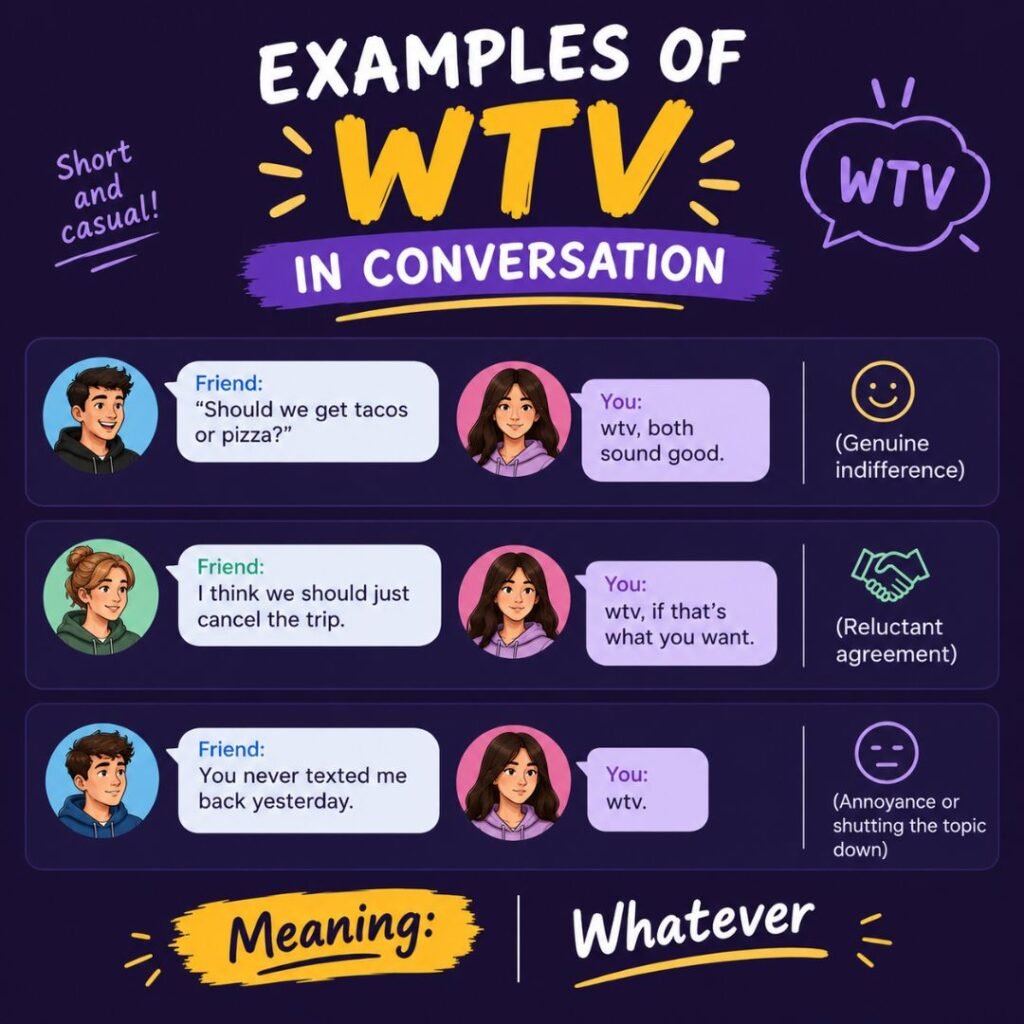
Seeing wtv used in real conversations makes the meaning much easier to understand.
- Friend: “Should we get tacos or pizza?” You: “wtv, both sound good.” (Genuine indifference)
- Friend: “I think we should just cancel the trip.” You: “wtv, if that’s what you want.” (Reluctant agreement)
- Friend: “You never texted me back yesterday.” You: “wtv.” (Annoyance or shutting the topic down)
Notice how the same three letters carry three different emotions. That is the real challenge with wtv: the words around it, or the total lack of words around it, do most of the work.
When to Use and When Not to Use WTV
Wtv works well in casual settings among friends, especially when you genuinely do not have a preference. It saves time and keeps the conversation moving without sounding fussy.
It works poorly in a few situations:
- During a serious conversation, where a short reply can feel like you are shutting the other person out
- In professional messages, where it reads as careless or immature
- Right after an apology, where it can come across as unresolved anger instead of acceptance
A simple rule to follow: if the conversation actually matters to the other person, skip wtv and use a full sentence instead.
Read More: WSG Meaning in Text: Full 2026 Slang Breakdown
How Is WTV Used in Different Contexts?
Context changes everything about wtv. Among close friends, it is often light and harmless, closer to a shrug than a real objection. In group chats, it can be used to move a group decision along faster, since nobody wants to be the one holding up plans.
In arguments or tense conversations, wtv shifts meaning fast. It becomes a way to end a topic without agreeing to disagree out loud. The sender is not necessarily fine with the outcome. They are choosing not to keep talking about it right now.
WTV Meaning on Snapchat, TikTok, Instagram, WhatsApp
The meaning of wtv stays consistent across apps, but the tone can shift based on where it shows up.
- Snapchat: often used to end a conversation quickly or brush off a question, since replies there already tend to be short
- TikTok comments: usually playful, replying to a joke or opinion without much weight behind it
- Instagram DMs: can lean dismissive, especially in a fast back and forth where one person is losing interest
- WhatsApp: tends to carry more weight, since WhatsApp is often used for closer or more personal conversations, so wtv there can feel colder
Reading the platform along with the words gives you a much clearer sense of what someone actually means.
What WTV Can Mean Besides Whatever (and What to Text Instead)
Almost every guide to wtv stops at “whatever,” but the letters occasionally get stretched into other things inside small communities. In some gaming or Discord circles, people jokingly use wtv as shorthand for “what’s the vibe,” though this is rare and only makes sense inside that group. If wtv shows up outside a normal texting context and “whatever” does not fit, just ask what the sender means instead of guessing.
The bigger gap most guides skip is what to text when wtv is not actually what you want to say. If you do care about the outcome, a short alternative keeps the conversation open instead of shutting it down. A few swaps worth trying:
- Instead of “wtv,” try “either one works, you pick” when you genuinely have no preference
- Instead of “wtv” after a disagreement, try “let’s talk about it later” if you need space but do not want to sound cold
- Instead of “wtv” when you are annoyed, try “I’m a little frustrated, can we talk?” if you want the other person to actually understand you
These small swaps keep the same low effort feel of wtv while avoiding the mixed signals that make people overthink a three letter reply.
Common Misunderstandings About WTV
A lot of people assume wtv is always rude or always dismissive. That is not accurate. In most day to day texting, it is neutral and simply saves time.
Another common misunderstanding is treating wtv as a one size fits all response. Because the tone depends so heavily on context, punctuation, and timing, the same word can mean total agreement in one message and quiet frustration in the next. Reading only the word, without reading the situation around it, is where most confusion starts.
WTV vs Similar Terms and Alternatives
Wtv is one of several short texting replies that signal a similar low key attitude, but each one carries a slightly different tone.
| Term | Meaning | Typical Tone |
| WTV | Whatever | Neutral to dismissive |
| IDM | I don’t mind | Often blunt or flat |
| NVM | Never mind | Dropping the topic |
| IG | I guess | Reluctant, uncertain |
| K | Okay | Short, sometimes cold |
WTV tends to sit in the middle of this group. It is softer than IDC, which can feel blunt, but it carries more emotional weight than a simple “k.”
How to Respond to WTV
How you respond to wtv depends on what you think the sender actually means.
- If it feels neutral: “Cool, I’ll pick then” keeps things moving without making it a bigger deal than it is.
- If it feels annoyed: “You okay? You can be honest with me” opens the door without forcing a conversation.
- If it feels dismissive: “Let me know if you want to talk about it later” gives space while showing you noticed the tone.
These replies avoid turning a short message into a longer conflict while still showing you are paying attention.
Tips for Using WTV Naturally
- Use it only when you genuinely do not have a strong opinion, not as a way to avoid a real conversation
- Pair it with a quick follow up word or emoji if you want to soften the tone
- Save it for casual chats with people who already understand your texting style
- Avoid it in professional or first time conversations, where it can come across as careless
FAQ’s
What does WTV mean in a text message?
WTV means “whatever.” It is a short way of saying you do not have a strong preference or do not want to keep discussing something.
Is WTV rude?
WTV is not rude on its own. It becomes rude or dismissive mostly through tone, timing, and the conversation it shows up in.
Does WTV mean the same thing on every app?
The core meaning stays the same everywhere, but the tone can shift slightly depending on the app and how the conversation has been going.
What should I text instead of WTV if I actually care?
Try a short honest reply like “either one works” or “can we talk about this later” instead of wtv when the outcome actually matters to you.
Is WTV only used by younger people?
WTV started within younger texting culture, but it is now used across many age groups in casual digital conversations.
Conclusion
WTV means “whatever,” but the real meaning almost always comes from tone, timing, and the relationship between the people texting.
Read the full conversation, not just the three letters, before deciding what someone means. Once you understand the context clues, wtv becomes easy to use and easy to read.

Albert is a dedicated meaning expert with over 6 years of experience researching word meanings, language usage, and definitions. At Mean Grid, he creates clear, accurate, and easy-to-understand content that helps readers explore the true meaning of words and phrases.